
Draughty rooms, rising energy bills, and cold spots are common complaints across Irish homes. Because of Ireland’s damp and windy climate, airtightness plays a critical role in comfort and efficiency. More importantly, your windows are often the biggest culprits when it comes to unwanted heat loss.
In this guide, you’ll discover how to reduce draughts in Irish homes, improve window insulation, and enhance overall airtightness — all while lowering heating costs.
Why Airtightness Matters in Irish Homes
Ireland’s climate is mild but wet and windy. As a result, poorly sealed homes lose heat quickly. Airtightness refers to how well your home prevents uncontrolled air leakage through gaps, cracks, and poorly fitted windows or doors.
Benefits of Improved Airtightness
- Lower heating bills
- Increased indoor comfort
- Reduced condensation and mould risk
- Better energy efficiency rating (BER)
- Improved indoor air quality (when paired with proper ventilation)
Therefore, investing in better airtight windows and sealing solutions delivers both immediate comfort and long-term savings.
Common Causes of Draughts Around Windows
Before you fix the problem, you must identify the source. Typically, draughts occur due to:
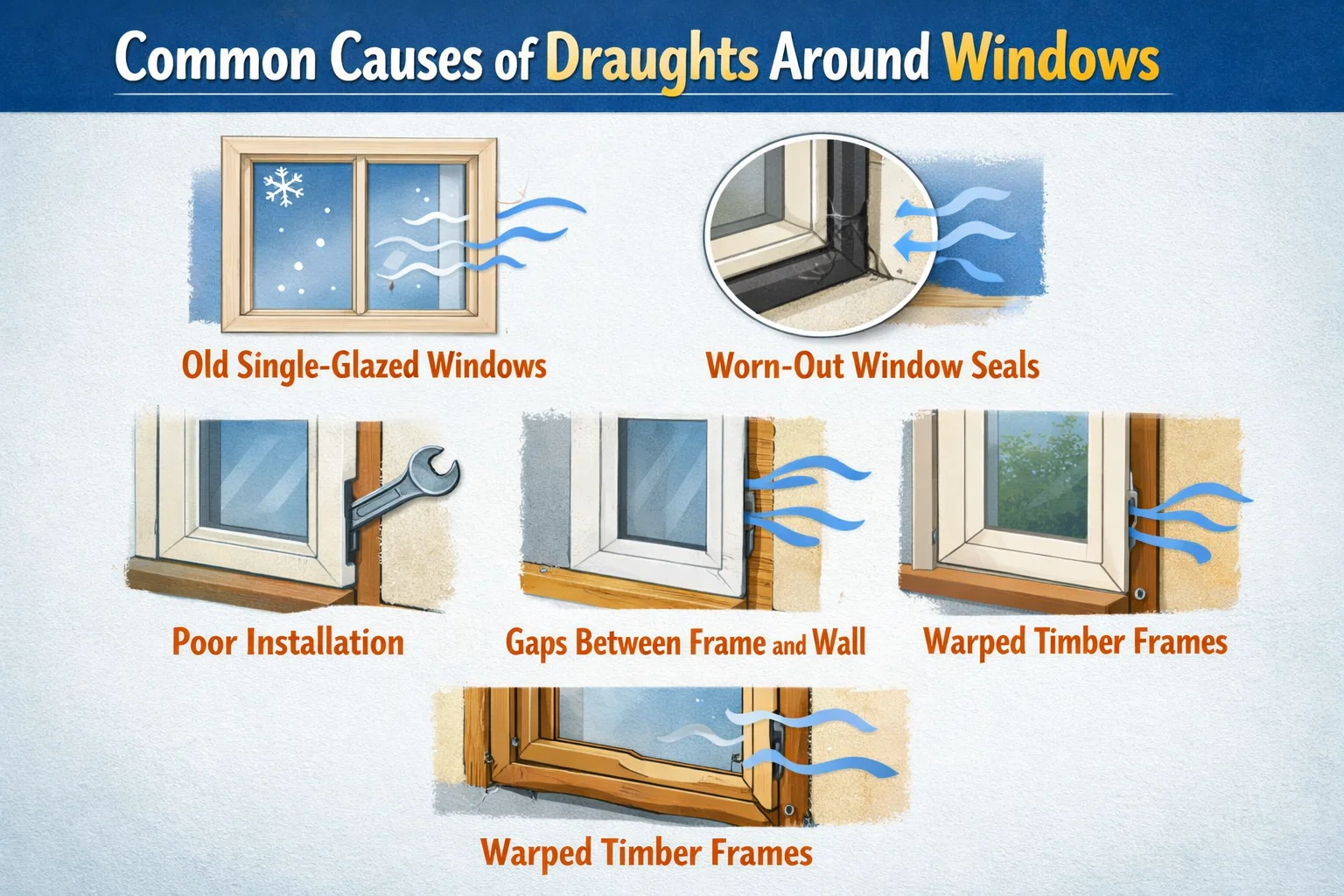
- Old single-glazed windows
- Worn-out window seals
- Poor installation
- Gaps between frame and wall
- Warped timber frames
In many older Irish properties, original windows were never designed with modern airtightness standards in mind. Consequently, air leakage becomes inevitable over time.
Signs Your Windows Are Causing Heat Loss
You may not always see a gap, but you can certainly feel it. Look out for:
- Cold air near window edges
- Curtains moving even when windows are closed
- Whistling sounds during windy weather
- Condensation forming between panes
- Higher-than-normal heating bills
If you notice two or more of these signs, your windows likely need attention.
How to Reduce Draughts in Irish Homes
Now let’s explore practical solutions. Depending on your budget and home type, you can choose temporary fixes or long-term upgrades.
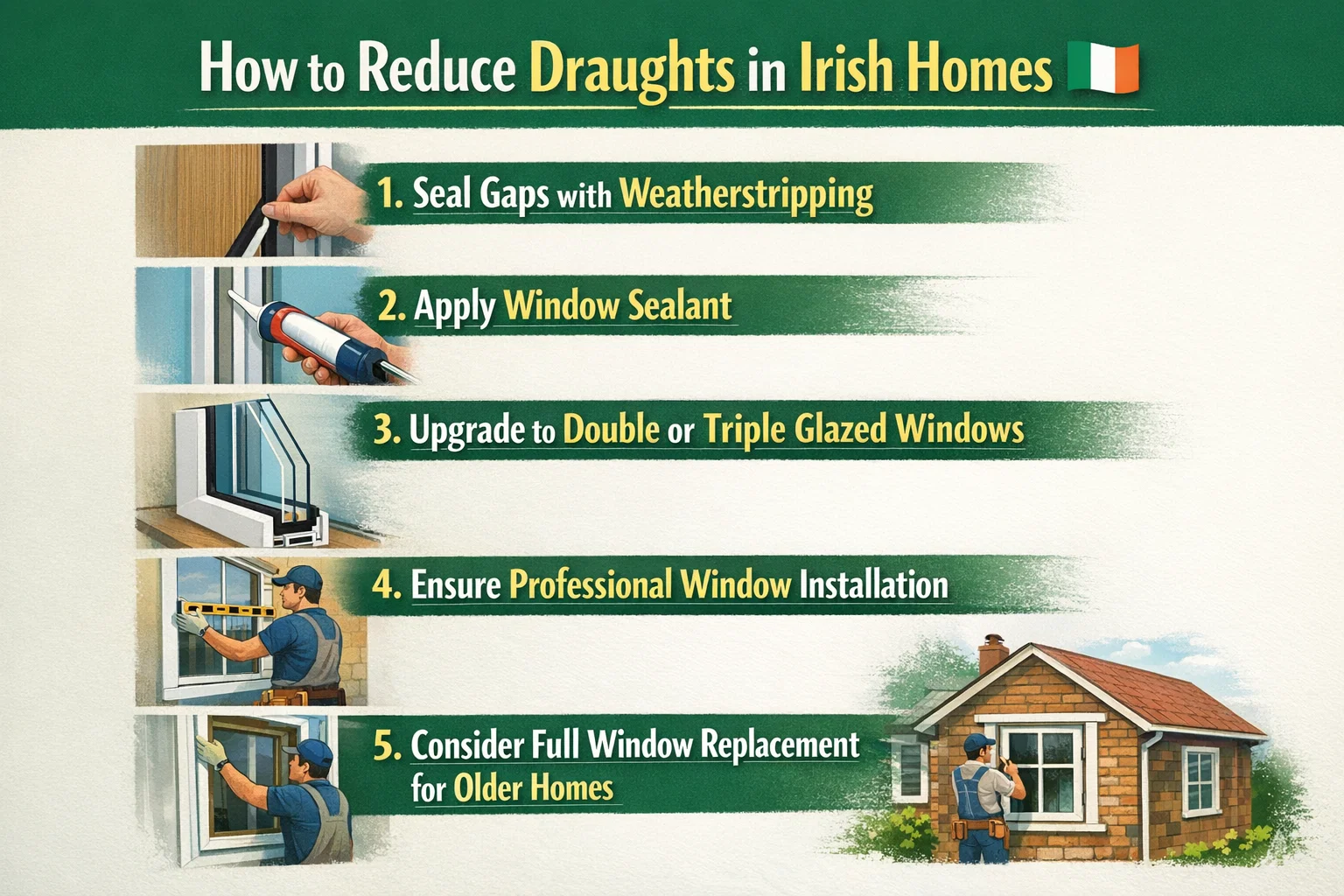
1. Seal Gaps with Weatherstripping
Weatherstripping is one of the most cost-effective draught-proofing methods.
Best for:
- Minor gaps
- Older uPVC or timber windows
However, while weatherstripping helps, it is only a temporary solution. Over time, seals degrade and need replacement.
2. Apply Window Sealant
If gaps exist between the window frame and wall, silicone sealant can block air leaks.
Steps:
- Remove old cracked sealant
- Clean the surface
- Apply high-quality exterior-grade silicone
- Allow proper curing time
Although this improves airtightness, it won’t fix poor glazing performance.
3. Upgrade to Double or Triple Glazed Windows
For long-term energy savings, upgrading windows is the most effective solution.
| Window Type | Energy Efficiency | Draught Reduction | Cost Level |
|---|---|---|---|
| Single Glazing | Low | Poor | € |
| Double Glazing | High | Very Good | €€ |
| Triple Glazing | Excellent | Outstanding | €€€ |
Modern double and triple-glazed units significantly reduce air infiltration. Moreover, they improve thermal insulation and noise reduction.
Companies like Wright Windows Ireland specialise in high-performance window systems designed specifically for Irish weather conditions. Their energy-efficient windows help homeowners achieve better airtightness without compromising ventilation.
4. Ensure Professional Window Installation
Even the best window will underperform if installed incorrectly. Therefore, professional installation is crucial.
A properly installed window should:
- Have airtight membrane sealing
- Include insulated cavity closers
- Be fully sealed internally and externally
- Meet Irish building regulations
Choosing experienced providers ensures your airtightness upgrades actually deliver results.
5. Consider Full Window Replacement for Older Homes
In some cases, especially in homes built before 1990, replacing windows entirely makes financial sense.
When Replacement Is the Best Option:
- Frames are rotting or warped
- Persistent condensation occurs
- Heating bills continue to rise
- You plan a deep retrofit or energy upgrade
Modern airtight window systems can reduce heat loss by up to 30%, depending on the property type.
Airtightness vs Ventilation: Finding the Right Balance
While reducing draughts is essential, ventilation must not be ignored. Airtight homes still require controlled airflow to prevent moisture build-up.
Therefore, modern window systems often include:
- Trickle vents
- Mechanical ventilation compatibility
- Controlled air exchange systems
This balance ensures your home stays warm and healthy.
Energy Grants Available in Ireland
If cost is a concern, there is good news. The Sustainable Energy Authority of Ireland (SEAI) offers grants for energy-efficient home upgrades, including window replacements under certain retrofit schemes.
Because of this support, upgrading to airtight windows has become more affordable for Irish homeowners with SEAI windows and Doors Grant.
Cost of Draught-Proofing vs Window Replacement
Here’s a quick comparison:
| Solution | Average Cost (Ireland) | Lifespan | Energy Savings Potential |
|---|---|---|---|
| Weatherstripping | €100–€300 | 2–5 years | Low |
| Resealing | €200–€600 | 5–10 years | Moderate |
| Full Window Replacement | €4,000–€15,000+ | 20–30 years | High |
Although replacement requires higher upfront investment, the long-term savings and comfort improvements are substantial.
Final Thoughts: Create a Warmer, More Efficient Home
Reducing draughts in Irish homes starts with understanding where heat loss occurs. In most cases, windows play a significant role. While temporary fixes offer short-term relief, upgrading to professionally installed, energy-efficient windows provides lasting results.
By improving airtightness, you will:
- Lower heating bills
- Increase property value
- Improve indoor comfort
- Enhance energy ratings
If you’re considering an upgrade, consulting specialists like Wright Windows Ireland can help you choose the right solution tailored to Irish weather conditions.
Ultimately, a draught-free home is not just about warmth — it’s about smarter, more sustainable living.
Readmore : Condensation on Windows in Irish Homes: Causes, Solutions & Prevention Tips
Frequently Asked Questions
1. How can I tell if my windows are draughty?
If you feel cold air near closed windows, notice condensation between panes, or see curtains move on windy days, your windows may be leaking air. Older seals and poor installation are common causes in Irish homes.
2. Is draught-proofing enough to fix the problem?
Draught-proofing works for small gaps and minor leaks. However, if your windows are old or single-glazed, replacing them with modern double or triple glazing offers better long-term results.
3. Will new windows lower my heating bills?
Yes. Energy-efficient windows reduce heat loss, so your heating system works less. As a result, many homeowners notice improved comfort and lower energy costs.
4. Are grants available for window upgrades in Ireland?
In some cases, support may be available through schemes from the Sustainable Energy Authority of Ireland (SEAI). It’s best to check current eligibility before starting your upgrade.