
Condensation on windows is one of the most common issues faced by homeowners across Ireland. While it may seem like a minor inconvenience at first, persistent condensation can lead to mould growth, structural damage, and poor indoor air quality. Therefore, understanding the root causes and applying the right solutions is essential for maintaining a healthy and energy-efficient home.
In this guide, we’ll explore why condensation forms, how to fix it, and most importantly, how to prevent it long term — especially in Ireland’s damp climate.
What Is Window Condensation?
Condensation occurs when warm, moist air comes into contact with a colder surface, such as a windowpane. As a result, the moisture in the air turns into water droplets.
In Ireland, this issue becomes more noticeable during autumn and winter. Because temperatures drop significantly outside while indoor heating increases, windows often become the coldest surface in the room.
Why Is Condensation So Common in Irish Homes?
Ireland’s climate plays a major role. However, lifestyle habits and home insulation standards also contribute.
Key Causes of Window Condensation
| Cause | Explanation | Impact on Your Home |
|---|---|---|
| High Indoor Humidity | Cooking, showering, drying clothes indoors | Increased moisture build-up |
| Poor Ventilation | Limited airflow traps humid air | Persistent condensation |
| Cold Window Surfaces | Older or single-glazed windows | Faster moisture formation |
| Temperature Differences | Warm inside, cold outside | Surface water droplets |
Moreover, modern homes are built to be more airtight. While this improves energy efficiency, it can also trap moisture indoors if ventilation is inadequate.
Types of Window Condensation
Understanding where condensation appears helps identify the solution.
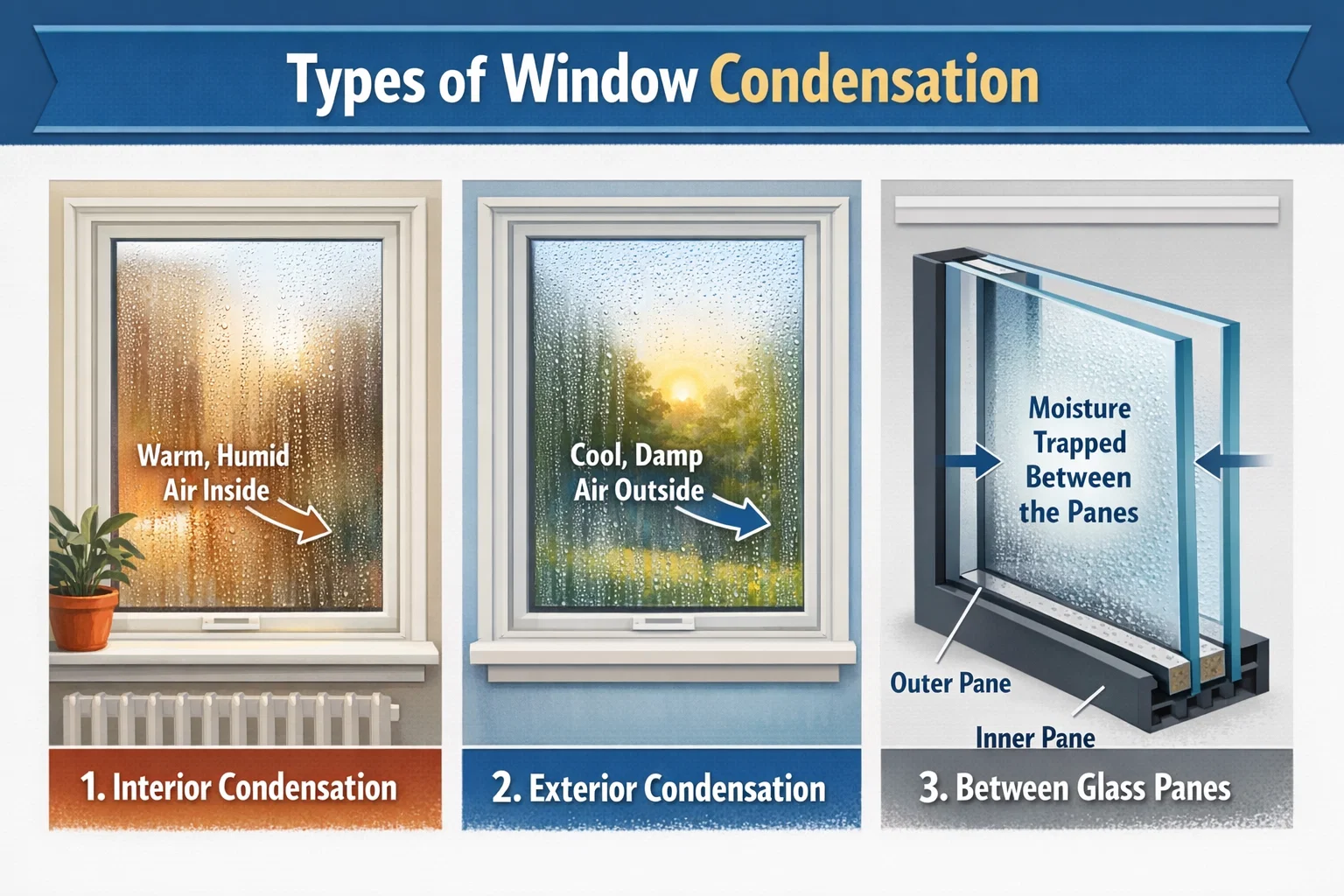
1. Interior Condensation
This forms on the inside surface of your window. Usually, it indicates high indoor humidity or insufficient ventilation.
2. Exterior Condensation
This appears on the outside of the window. Interestingly, this is often a sign of good insulation and high-performance glazing.
3. Between Glass Panes
If condensation appears between double or triple glazing, the seal has likely failed. Consequently, the unit may require replacement.
Why You Shouldn’t Ignore Window Condensation
Although condensation may seem harmless, it can cause serious problems over time.
-
Mould and mildew growth
-
Peeling paint and damaged window frames
-
Rotting timber
-
Increased allergy and respiratory issues
-
Reduced energy efficiency
Therefore, early intervention saves both money and long-term structural damage.
How to Stop Condensation on Windows
Fortunately, you can take several practical steps to reduce and eliminate condensation.
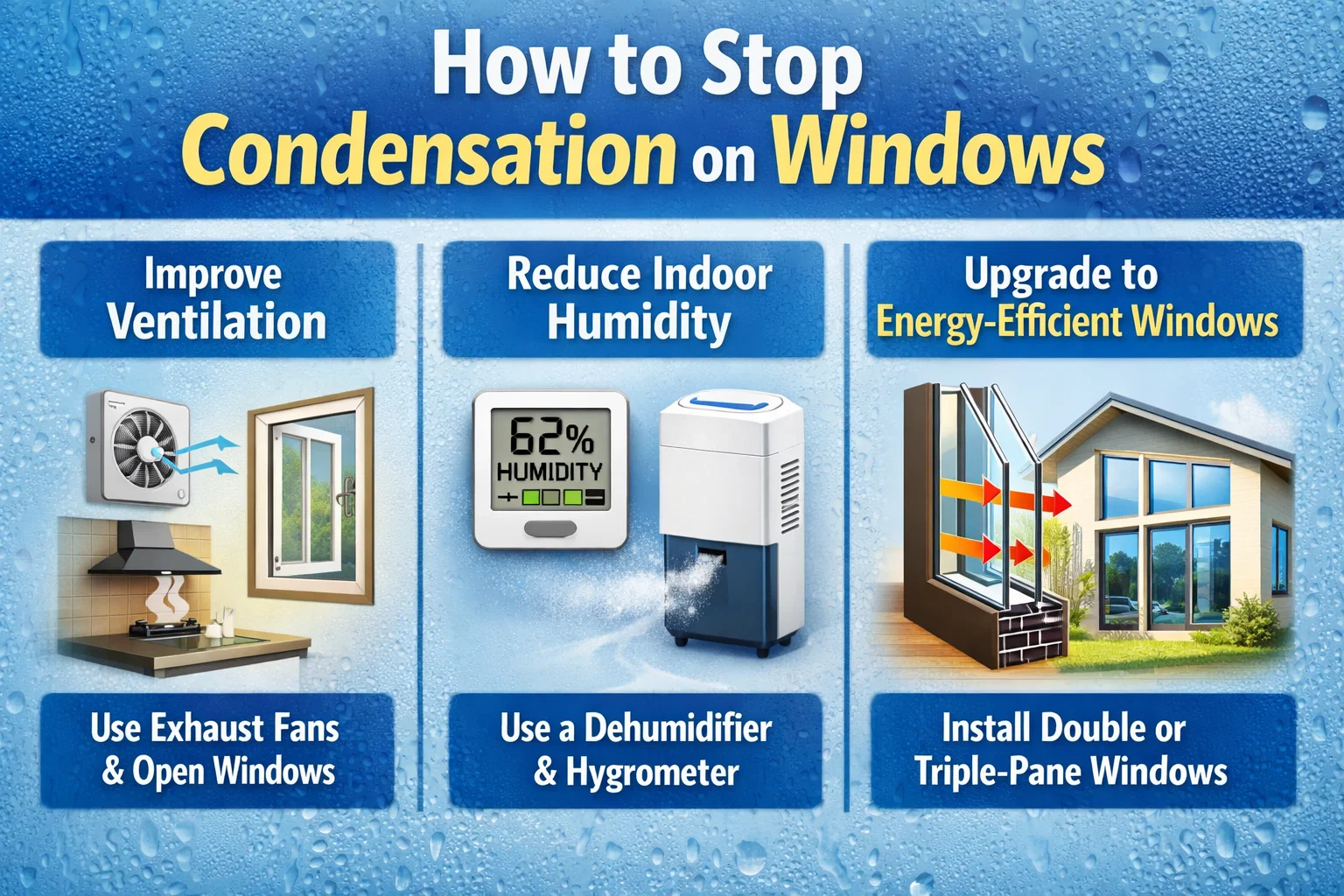
Improve Ventilation
First and foremost, increase airflow inside your home.
-
Open trickle vents daily
-
Use extractor fans in kitchens and bathrooms
-
Open windows briefly, even in winter
-
Install mechanical ventilation systems if necessary
As a result, moisture levels decrease significantly.
Reduce Indoor Humidity
Next, limit excess moisture production.
-
Avoid drying clothes indoors without ventilation
-
Keep lids on pots while cooking
-
Use a dehumidifier
-
Maintain consistent heating levels
In addition, maintaining steady temperatures prevents rapid condensation cycles.
Upgrade to Energy-Efficient Windows
If condensation persists, your windows may be the issue. Older single-glazed units lose heat quickly. Therefore, upgrading to modern double or triple glazing can dramatically reduce condensation.
High-quality window systems improve:
-
Thermal insulation
-
Surface temperature stability
-
Indoor comfort
-
Energy efficiency
For homeowners looking for durable and energy-efficient solutions, Wright Windows Ireland provides modern glazing systems designed specifically for Irish weather conditions. Their advanced window technology helps minimise condensation while improving overall home insulation.
Prevention Tips for Long-Term Results
Preventing condensation requires consistency. However, small daily habits make a big difference.
Daily Prevention Checklist
-
✔ Ventilate rooms every morning
-
✔ Wipe excess moisture from windows
-
✔ Keep furniture slightly away from external walls
-
✔ Maintain indoor humidity between 40–60%
-
✔ Service window seals regularly
Furthermore, investing in energy-efficient windows ensures better long-term moisture control.
Condensation vs. Damp: Know the Difference
Many homeowners confuse condensation with structural damp. However, the two issues differ.
| Condensation | Damp |
|---|---|
| Forms on cold surfaces | Penetrates walls from outside |
| Seasonal (winter-heavy) | Can occur year-round |
| Linked to humidity | Linked to leaks or structural issues |
| Surface-level moisture | Deep wall moisture |
If mould appears primarily around windows, condensation is usually the cause.
When Should You Replace Your Windows?
You should consider replacement if:
-
Condensation forms between panes
-
Draughts are noticeable
-
Energy bills are rising
-
Frames show signs of rot or warping
Modern double or triple glazing significantly reduces heat transfer. Consequently, it lowers the likelihood of condensation forming in the first place.
Final Thoughts: Protect Your Irish Home from Window Condensation
Condensation on windows in Irish homes is common, but it is preventable. By improving ventilation, managing humidity, and upgrading inefficient windows, you can protect your property from mould, structural damage, and energy loss.
Most importantly, taking action early prevents costly repairs later. Whether you start with small lifestyle adjustments or invest in high-performance glazing, the key is consistency.
If you are experiencing persistent condensation issues, it may be time to assess your windows’ efficiency and explore modern solutions tailored to Ireland’s climate.
Read more : Upgrade Your Home with SEAI’s 2026 Windows & Doors Grant
FAQs About Condensation on Windows
Is condensation on windows normal in winter?
Yes, especially in Irish homes. However, excessive condensation indicates high humidity or poor ventilation.
Does double glazing stop condensation completely?
Not entirely. However, it significantly reduces it by maintaining warmer glass surface temperatures.
Can mould from condensation affect health?
Yes. Prolonged mould exposure can trigger allergies and respiratory issues.