
Choosing the right windows and doors in 2026 is no longer just about style. Instead, it’s about compliance, energy efficiency, sustainability, and long-term value. Irish building regulations have evolved significantly in recent years. As a result, homeowners, builders, and developers must pay close attention to updated standards before making any purchase decisions.
In this guide, you’ll discover how Irish building regulations directly affect your window and door choices in 2026 — and how companies like Wright Windows Ireland help ensure full compliance while delivering high-performance products.
Why Irish Building Regulations Matter in 2026
First and foremost, building regulations exist to ensure safety, energy efficiency, and environmental sustainability. In 2026, the focus has shifted even further toward:
-
Nearly Zero Energy Buildings (NZEB) compliance
-
Lower carbon emissions
-
Improved insulation standards
-
Enhanced ventilation requirements
Therefore, your window and door selection must align with Part L (Conservation of Fuel and Energy) and other relevant Irish Building Regulations.
Part L 2026 Updates – Energy Performance & U-Values
One of the most critical factors influencing window and door choices is thermal performance.
What Is a U-Value?
A U-value measures how much heat passes through a window or door. Simply put:
-
Lower U-value = Better insulation
-
Higher U-value = More heat loss
In 2026, new builds and major renovations must meet stricter U-value requirements.
Typical U-Value Requirements in Ireland (2026)
| Element | Maximum U-Value (W/m²K) |
|---|---|
| Windows | 1.2 or lower |
| Doors | 1.4 or lower |
| Rooflights | 1.4 or lower |
Because of these limits, single glazing is no longer acceptable in compliant projects. Instead, homeowners must choose:
-
Triple glazing (in many cases)
-
High-performance double glazing
-
Thermally broken frames
-
Low-emissivity (Low-E) glass
Consequently, window frame materials now play a major role in compliance.
Best Window Materials for Irish Regulations in 2026
Different materials perform differently under Irish climate conditions.
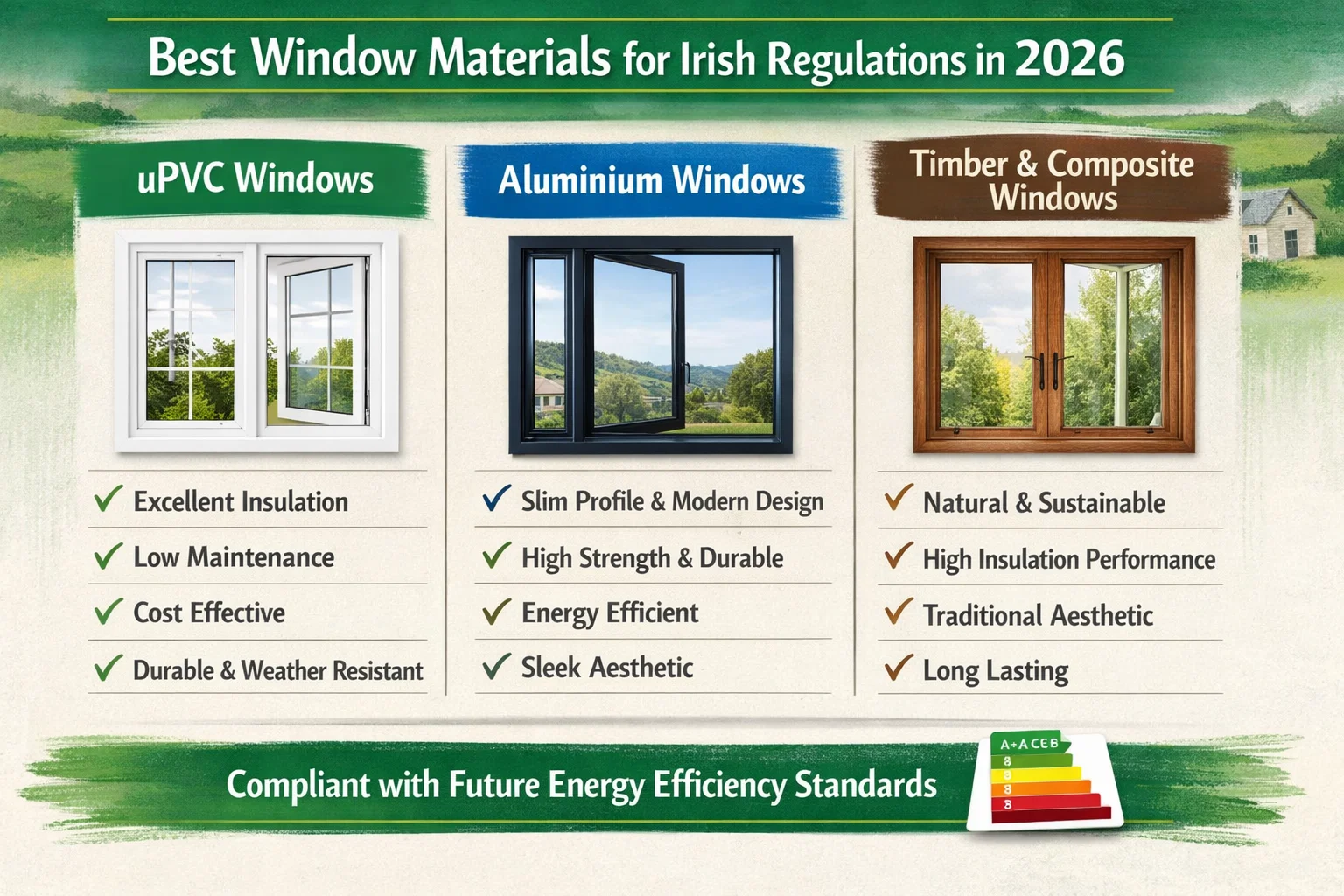
uPVC Windows
uPVC remains popular because:
-
It offers excellent insulation.
-
It requires minimal maintenance.
-
It meets Part L standards when properly specified.
Moreover, modern uPVC frames include multi-chamber technology, which significantly improves thermal performance.
Aluminium Windows
Although aluminium was once less efficient, thermally broken aluminium frames now comply with 2026 standards. In addition:
-
They offer slim sightlines.
-
They provide modern aesthetics.
-
They support large glazing areas.
However, always verify certified U-values before purchase.
Timber & Composite Windows
Timber remains a sustainable option. Meanwhile, composite systems combine:
-
Internal timber (for insulation)
-
External aluminium (for durability)
As a result, they often exceed minimum energy requirements.
Ventilation & Air Tightness – A Critical Factor
Energy efficiency alone is not enough. In fact, modern Irish regulations demand controlled ventilation.
Why Airtight Windows Matter
High-performance windows reduce drafts. However, without proper ventilation, indoor air quality can suffer.
Therefore, 2026-compliant homes often require:
-
Trickle vents (where applicable)
-
Mechanical ventilation systems (MVHR)
-
Proper installation sealing
Professional installation is essential. For example, Wright Windows Ireland ensures airtight fitting standards that align with Irish compliance requirements.
Door Regulations in Ireland – Security & Energy Combined
Doors must now satisfy both thermal performance and security regulations.
Key Requirements for External Doors
In 2026, compliant doors should offer:
-
U-value of 1.4 W/m²K or better
-
Multi-point locking systems
-
Weather sealing
-
Structural stability
Composite doors are increasingly preferred because they:
-
Deliver strong insulation
-
Improve home security
-
Reduce long-term maintenance
Impact on Homeowners vs. Self-Builders
Irish building regulations affect different groups in different ways.
For Homeowners Renovating
If you are replacing windows, you must ensure:
-
Products meet minimum energy standards.
-
Installers provide certification.
-
BER (Building Energy Rating) is considered.
Failure to comply can affect property resale value.
For Self-Builders & Developers
You must:
-
Submit compliance documentation.
-
Use certified products.
-
Ensure proper installation records.
Consequently, working with an experienced Irish supplier simplifies the compliance process.
Sustainability & Future-Proofing in 2026
Sustainability is no longer optional. Instead, it’s central to Irish construction standards.
Modern window and door systems now focus on:
-
Reduced embodied carbon
-
Recyclable materials
-
Longer product lifespan
-
Energy-efficient glazing technologies
Because energy prices remain volatile, investing in high-performance systems significantly lowers long-term heating costs.
Common Mistakes to Avoid in 2026
Many homeowners still make avoidable errors. However, you can prevent them by understanding regulations early.
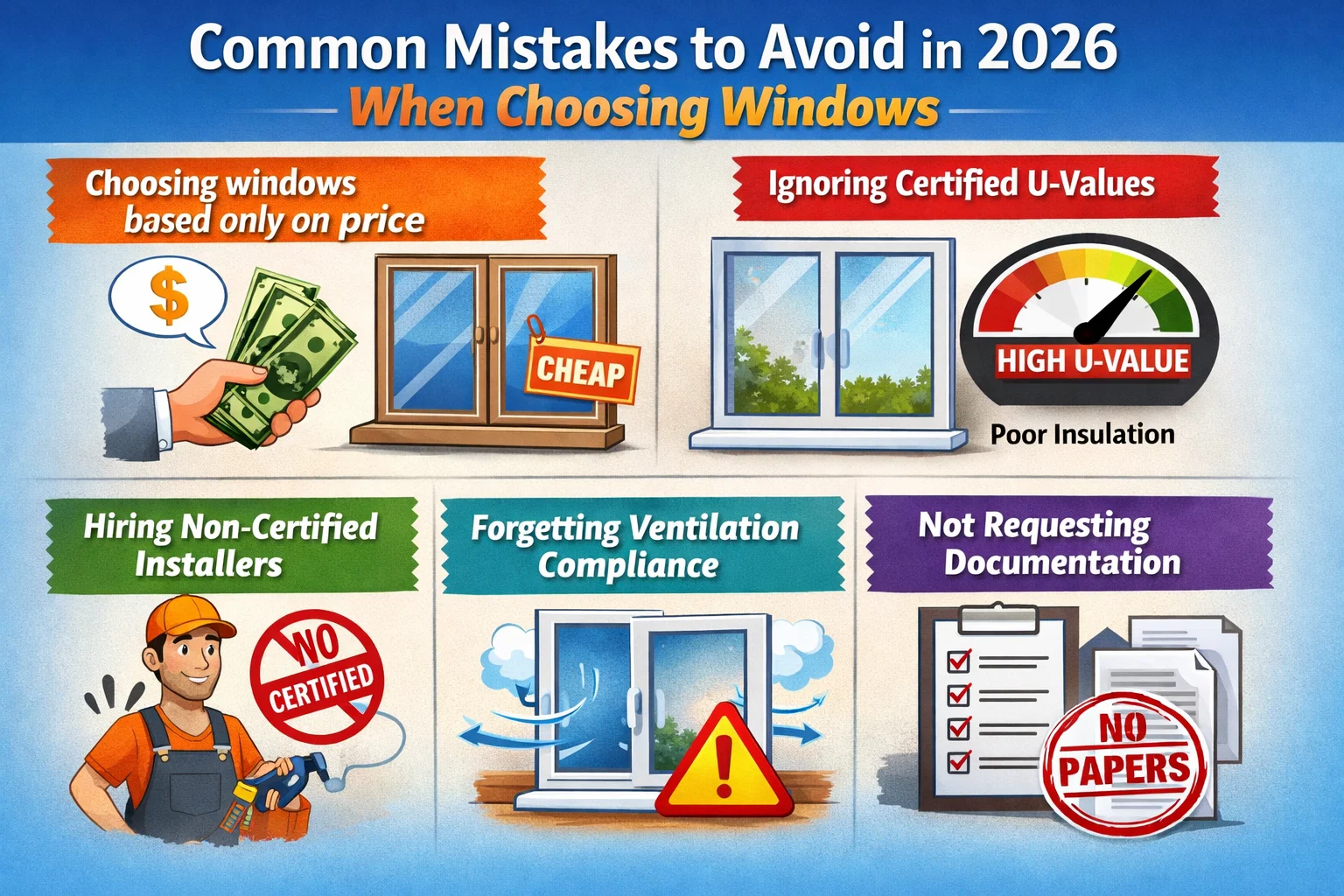
Avoid These Mistakes:
-
Choosing windows based only on price
-
Ignoring certified U-values
-
Hiring non-certified installers
-
Forgetting ventilation compliance
-
Not requesting documentation
Instead, always request performance certificates and compliance proof before final payment.
Why Professional Guidance Matters
Although regulations can seem complex, expert suppliers simplify the process. For example, Wright Windows Ireland provides:
-
Regulation-compliant window systems
-
High-performance composite doors
-
Professional installation
-
Guidance on Part L requirements
-
Energy-efficient glazing solutions
As a result, homeowners gain peace of mind and long-term energy savings.
Final Thoughts: Making the Right Window & Door Choices in Ireland (2026)
In 2026, Irish building regulations significantly influence window and door selection. Because energy efficiency standards are stricter, product performance matters more than ever.
To summarise:
-
U-values must meet Part L requirements.
-
Airtight installation is essential.
-
Ventilation compliance cannot be ignored.
-
Sustainable materials are increasingly important.
-
Professional installation ensures full compliance.
Ultimately, compliant windows and doors are not just a legal requirement — they are a smart investment. Therefore, whether you are renovating or building new, always choose certified, high-performance products from trusted Irish providers.
By understanding how Irish building regulations affect window and door choices in 2026, you can make informed decisions that improve comfort, reduce energy bills, and increase property value for years to come
Read more : Best Windows for Irish County Homes: Rural vs Urban Performance
FAQ’s
1. Do I need triple glazing to meet Irish building regulations in 2026?
Not always. However, your windows must achieve a maximum U-value of 1.2 W/m²K or lower under Part L requirements. In many cases, high-performance double glazing may be sufficient. Nevertheless, triple glazing often makes compliance easier, especially in new builds.
2. Are replacement windows required to meet current regulations?
Yes. If you are replacing windows in 2026, they must meet current energy efficiency standards. In addition, installers should provide certification to confirm compliance with Irish Building Regulations.
3. What is the required U-value for external doors in Ireland?
External doors must generally achieve a U-value of 1.4 W/m²K or better. Therefore, many homeowners now choose insulated composite doors to meet both thermal and security standards.
4. Why should I choose a certified supplier like Wright Windows Ireland?
A certified supplier such as Wright Windows Ireland ensures your windows and doors meet Part L requirements. Moreover, professional installation helps maintain airtightness, improve energy efficiency, and avoid compliance issues.