
Energy efficiency is now a top priority for homeowners across Ireland. Rising energy costs and stricter building regulations mean that windows play a crucial role in reducing heat loss. One technology that has transformed modern glazing is Low-E glass.
But what exactly is Low-E glass, and why is it becoming standard in Irish homes?
In this guide, we will explain how Low-E glass works, its benefits, and why many homeowners choose it when upgrading their windows. We will also discuss how professional installers like Wright Windows Ireland help homeowners achieve better insulation and lower energy bills.
What Is Low-E Glass?
Low-E glass (Low Emissivity glass) is a specially coated glass designed to improve thermal efficiency. The coating reflects heat while still allowing natural light to pass through.
In simple terms:
-
It keeps heat inside your home during winter
-
It reflects excess heat away during summer
-
It allows plenty of daylight without energy loss
Therefore, Low-E glass helps maintain a comfortable indoor temperature while reducing the need for heating and cooling systems.
How Low-E Glass Works
Low-E glass contains an ultra-thin metallic coating applied to the surface of the glass. This coating is invisible to the naked eye, yet it dramatically improves insulation performance.
Key Working Principle
The coating reflects infrared heat energy while allowing visible light to pass through.
| Feature | What It Does | Benefit for Irish Homes |
|---|---|---|
| Infrared Reflection | Reflects indoor heat back into the room | Reduces heating costs |
| UV Protection | Blocks harmful UV rays | Protects furniture and flooring |
| Light Transmission | Allows natural sunlight inside | Keeps rooms bright |
As a result, homes remain warmer in winter and cooler in summer.
Why Low-E Glass Is Ideal for Ireland’s Climate
Ireland’s climate is typically cool, damp, and windy. Because of this, heat loss through windows is a common problem.
Low-E glazing solves this issue in several ways.
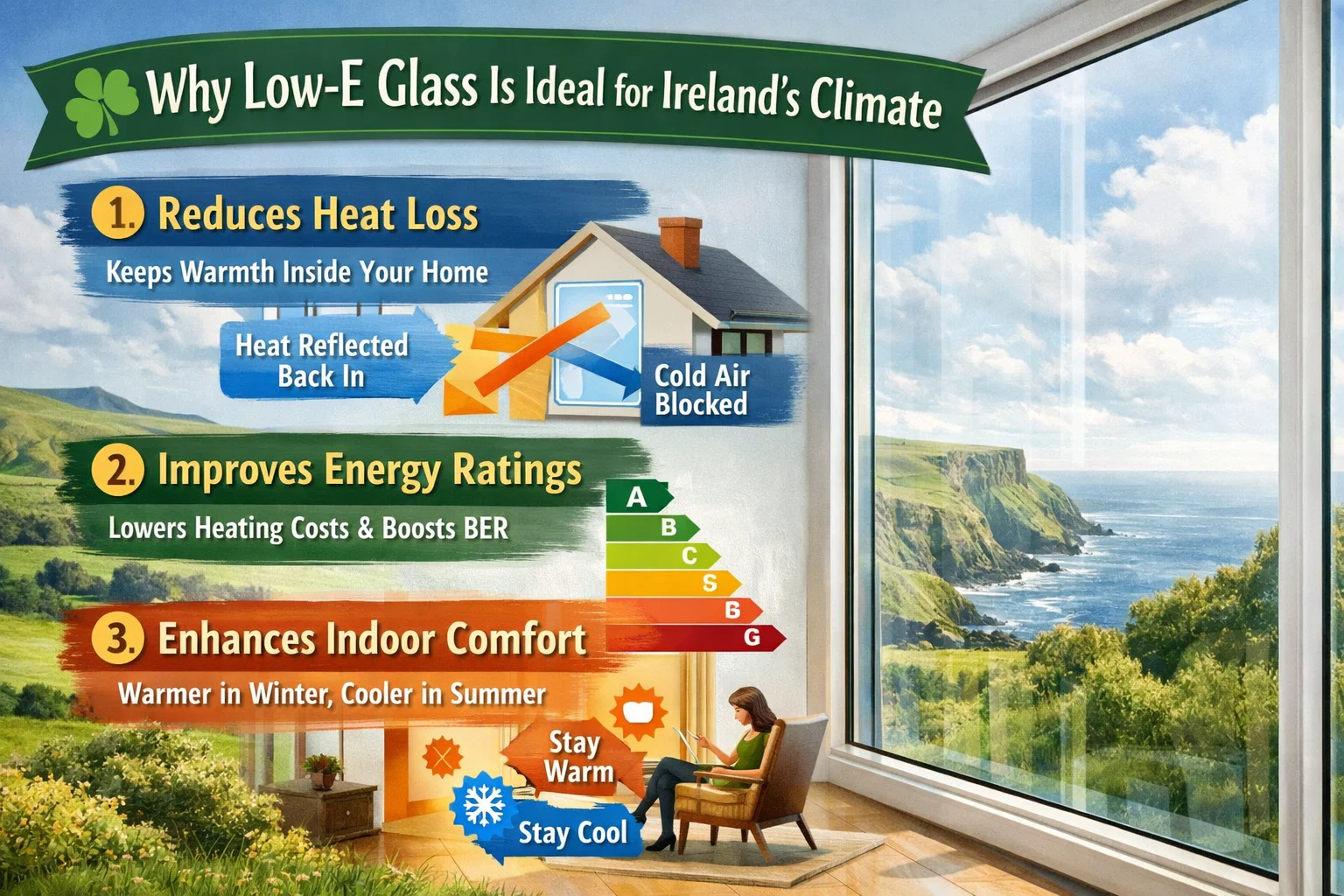
1. Reduces Heat Loss
Standard windows allow significant heat to escape. However, Low-E glass reflects interior warmth back inside the home.
Consequently, homeowners rely less on heating systems.
2. Improves Energy Ratings
Energy-efficient glazing contributes to a better Building Energy Rating (BER).
This improvement can:
-
Increase property value
-
Lower monthly energy costs
-
Make homes more environmentally friendly
3. Enhances Indoor Comfort
Because heat is retained more effectively, indoor temperatures remain stable. Therefore, rooms feel warmer without constantly adjusting heating systems.
Types of Low-E Glass Used in Modern Windows
Not all Low-E coatings are the same. In fact, there are two main types commonly used in residential windows.
1. Passive Low-E Coatings
Passive coatings allow more solar heat to enter the home.
They are ideal for:
-
Colder climates
-
South-facing windows
-
Homes seeking solar heat gain
2. Solar Control Low-E Coatings
These coatings reduce solar heat gain while still allowing natural light.
They work best for:
-
Large window areas
-
Modern glass facades
-
Homes exposed to strong sunlight
Professional installers like Wright Windows Ireland can help determine which option works best for your property.
Key Benefits of Low-E Glass for Homeowners
Low-E glazing offers multiple advantages beyond simple insulation.
Major Benefits
-
Lower energy bills
-
Reduced carbon footprint
-
Improved indoor comfort
-
Protection against UV damage
-
Increased property value
Moreover, the technology works seamlessly with double and triple glazing systems.
Low-E Glass vs Standard Glass
The difference between standard glass and Low-E glass is significant.
| Feature | Standard Glass | Low-E Glass |
|---|---|---|
| Heat Retention | Low | High |
| UV Protection | Minimal | High |
| Energy Efficiency | Poor | Excellent |
| Comfort Level | Moderate | High |
Because of these improvements, Low-E glass has become a key component in modern energy-efficient homes.
When Should You Upgrade to Low-E Windows?
Many homeowners upgrade their windows during renovations. However, there are specific signs that indicate it may be time to switch.
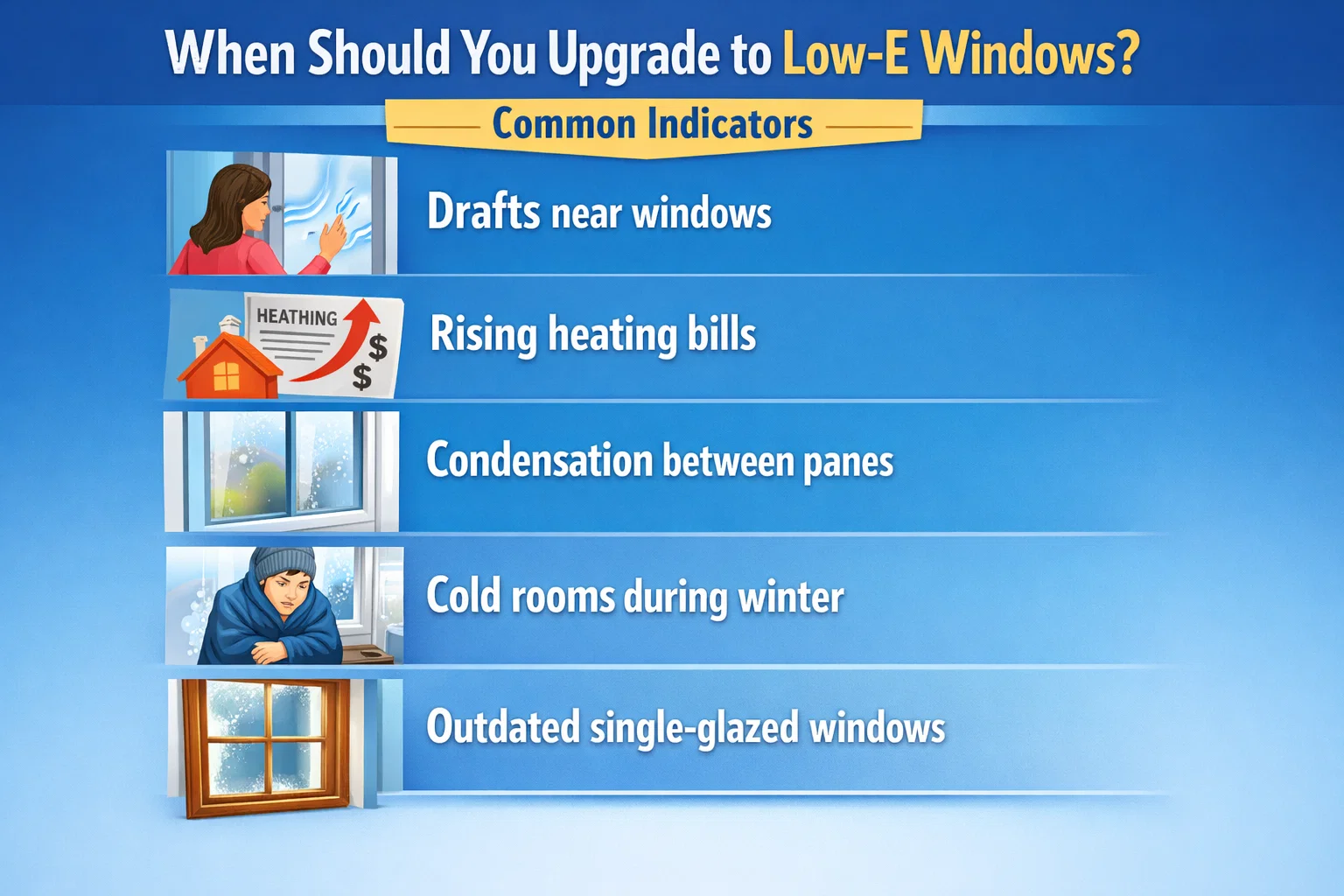
Common Indicators
-
Drafts near windows
-
Rising heating bills
-
Condensation between panes
-
Cold rooms during winter
-
Outdated single-glazed windows
If you notice these issues, upgrading to energy-efficient glazing can make a significant difference.
Choosing the Right Window Installer in Ireland
Even the best glass technology requires proper installation. Poorly installed windows can still allow heat loss and drafts.
Therefore, choosing a reliable supplier is essential.
Companies such as Wright Windows Ireland specialize in energy-efficient window solutions tailored to Irish homes. Their expertise ensures proper fitting, insulation, and long-term performance.
Additional Energy Efficiency Tips for Irish Homes
While Low-E glass significantly improves insulation, combining it with other upgrades can maximize energy savings.
Recommended Improvements
-
Install double or triple glazing
-
Use energy-efficient window frames
-
Seal gaps and drafts
-
Add insulated curtains or blinds
-
Improve attic insulation
When these upgrades work together, homes become significantly more energy efficient.
The Future of Energy-Efficient Windows
Window technology continues to evolve. In fact, newer innovations combine Low-E coatings with:
-
Argon or krypton gas-filled glazing
-
Smart glass technology
These advancements will further reduce energy consumption and improve home comfort.
Final Thoughts
Low-E glass is one of the most effective ways to improve window performance and reduce energy loss. Because it reflects heat while allowing natural light inside, it helps maintain comfortable indoor temperatures year-round.
For Irish homeowners, this means lower energy bills, improved comfort, and better property value.
If you are planning to upgrade your windows, consulting professionals such as Wright Windows Ireland can help ensure you choose the best energy-efficient solution for your home.
read more : Airtightness & Windows: How to Reduce Draughts in Irish Homes
FAQ’s
What is Low-E glass used for in homes?
Low-E glass is commonly used in modern residential windows to improve energy efficiency. It features a special microscopic coating that helps reduce heat loss while still allowing plenty of natural daylight to enter the home. As a result, indoor temperatures remain more stable, making homes warmer in winter and more comfortable throughout the year.
Does Low-E glass really reduce energy bills?
Yes, Low-E glass can significantly reduce household energy bills. The special coating reflects indoor heat back into the room instead of letting it escape through the glass. Because of this, heating systems do not need to work as hard to maintain comfortable temperatures, which ultimately lowers overall energy consumption in Irish homes.
Is Low-E glass better than standard double glazing?
Low-E glass is generally more efficient than standard double glazing because it includes an advanced thermal coating. This coating improves insulation performance, reduces heat transfer, and blocks a portion of harmful UV rays that can fade furniture and flooring. Therefore, windows with Low-E glass offer better energy efficiency, greater comfort, and improved long-term performance compared to traditional glazing.