
With energy prices remaining a major concern across Ireland, homeowners are increasingly asking one important question: how much can new windows reduce heating bills in Irish homes?
The short answer is—a lot more than most people expect.
In fact, upgrading to modern, energy-efficient windows can significantly lower heat loss, improve comfort, and reduce annual heating costs. In this guide, we’ll explain exact savings, key factors, and why upgrading your windows is one of the smartest home investments in Ireland.
Why Windows Have a Huge Impact on Heating Bills in Ireland
Irish homes lose a large percentage of heat through outdated windows. According to energy efficiency studies, up to 25–30% of heat loss can occur through poorly insulated glazing.
Common Problems with Old Windows
Older windows often suffer from:
-
Single glazing or early double glazing
-
Draughts and air leaks
-
Poor frame insulation
-
Condensation and cold spots
As a result, your heating system works harder and longer, driving energy bills up year after year.
How Much Can New Windows Reduce Heating Costs?
Average Heating Bill Savings in Irish Homes
While savings depend on several factors, most Irish homeowners save between 15% and 30% on heating bills after installing modern energy-efficient windows.
| Window Type Upgrade | Estimated Annual Heating Savings |
|---|---|
| Single → Double Glazing | 15% – 20% |
| Old Double → A-Rated Triple Glazing | 20% – 30% |
| Draughty Frames → Airtight uPVC/Alu | Up to 30% |
For a household spending €1,500 per year on heating, this could mean €225–€450 in annual savings.
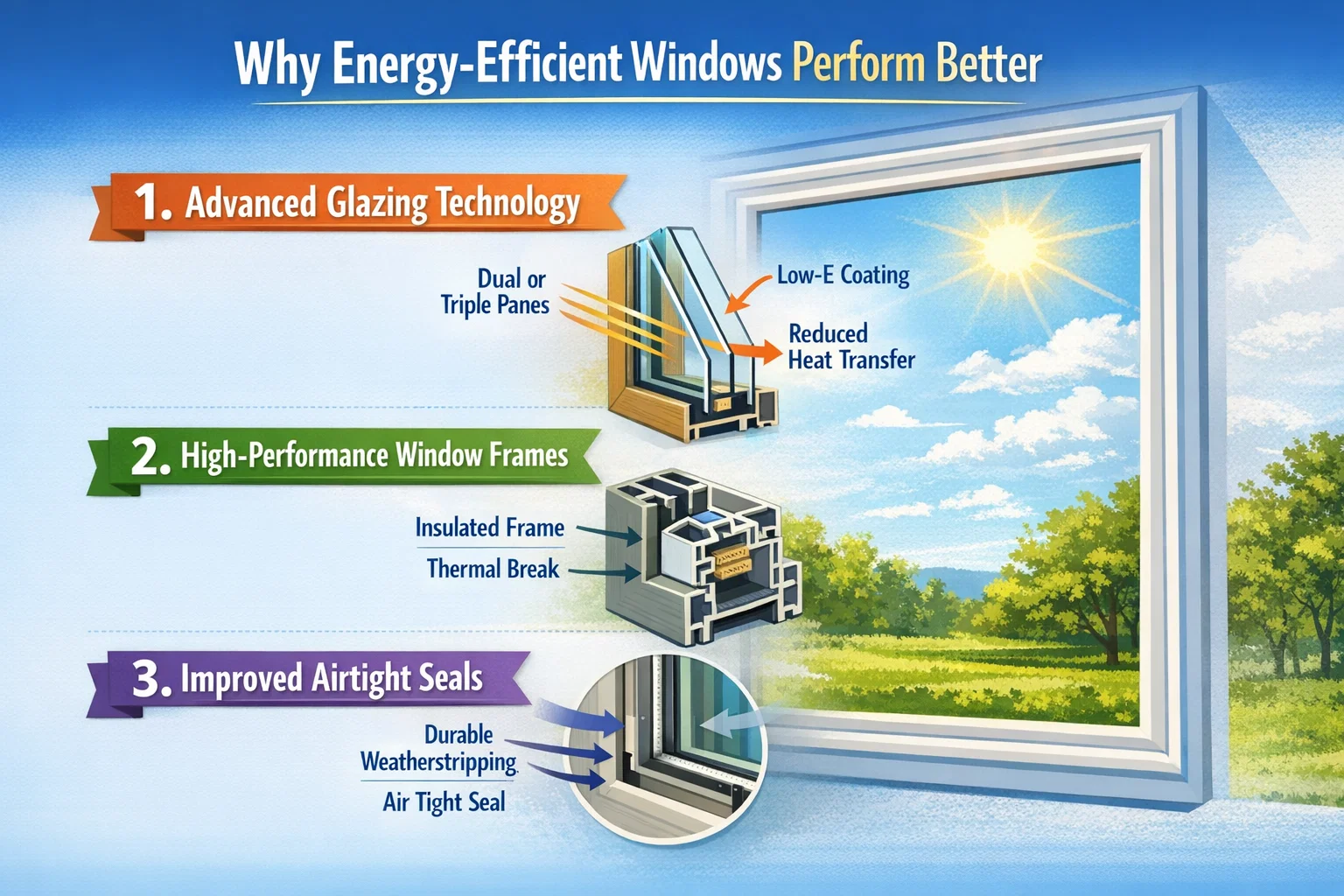
Why Energy-Efficient Windows Perform Better
Modern windows are designed specifically to reduce heat loss and maximize thermal efficiency.
Key Features That Reduce Heating Bills
1. Advanced Glazing Technology
Today’s windows use:
-
Low-E (low emissivity) glass
-
Argon gas filled cavities
-
Multiple glazing layers
As a result, heat stays inside during winter while cold air remains outside.
2. High-Performance Window Frames
Modern uPVC, aluminium, and composite frames provide:
-
Better insulation
-
Reduced thermal bridging
-
Improved airtightness
Consequently, your home maintains a stable indoor temperature for longer.
3. Improved Airtight Seals
New windows eliminate:
-
Draughts
-
Whistling air gaps
-
Cold air infiltration
Therefore, your boiler or heat pump doesn’t need to work as hard.
Are New Windows Worth It in the Irish Climate?
Absolutely. Ireland’s cool, damp climate makes energy efficiency especially important.
Why Window Upgrades Make Sense in Ireland
-
Long heating seasons (October–April)
-
High humidity increases heat loss
-
Rising oil, gas, and electricity costs
Because of this, windows deliver faster payback in Ireland compared to milder climates.
How Long Does It Take to See a Return on Investment?
Although new windows require an upfront investment, the long-term savings are substantial.
Typical Payback Period
-
5–8 years for most Irish homes
-
Faster if replacing single glazing
-
Even quicker when combined with SEAI upgrades
Moreover, windows also increase property value, making them a strong long-term investment.
Additional Benefits Beyond Heating Savings
While lower heating bills are important, new windows offer even more advantages.
Other Benefits of Installing New Windows
-
Increased indoor comfort
-
Reduced condensation and mould
-
Improved sound insulation
-
Enhanced home security
-
Better BER rating
Therefore, the value goes far beyond energy savings alone.
Why Choose Wright Windows Ireland?
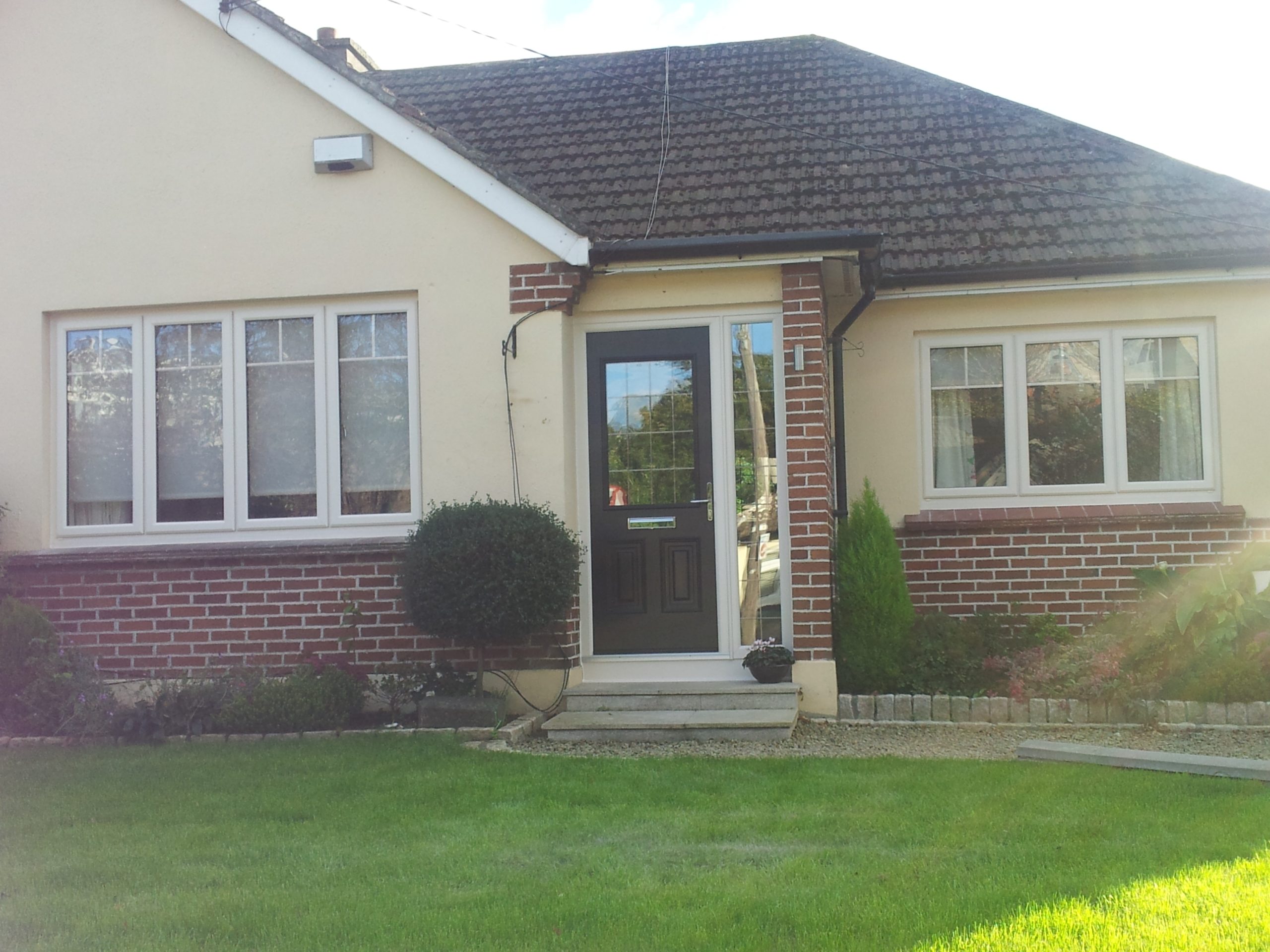
When it comes to energy-efficient windows, quality installation matters just as much as the product itself. That’s where Wright Windows Ireland stands out.
What Sets Wright Windows Ireland Apart?
-
Over 40 years of Irish manufacturing experience
-
Windows designed specifically for Irish weather conditions
-
A-rated and triple-glazed options available
-
Precision installation for maximum airtightness
-
Excellent after-sales support
As a result, homeowners enjoy maximum energy savings and long-lasting performance.
New Windows vs Other Energy Upgrades
Many homeowners ask whether windows are better than insulation or heating upgrades.
Comparison of Common Energy Improvements
| Upgrade Type | Cost Level | Energy Savings | Comfort Improvement |
|---|---|---|---|
| New Windows | Medium | High | Very High |
| Attic Insulation | Low | Medium | Medium |
| Boiler Upgrade | High | Medium | Medium |
| External Insulation | Very High | Very High | High |
Windows offer one of the best balances between cost, savings, and comfort.
How to Maximize Heating Bill Savings with New Windows
To get the best results, follow these best practices:
-
Choose A-rated or triple-glazed windows
-
Ensure professional installation
-
Upgrade seals and locking systems
-
Combine with attic or wall insulation
-
Consider SEAI grants where applicable
By doing this, you can significantly accelerate your savings.
Final Thoughts: Are New Windows Worth It for Irish Homes?
So, how much can new windows reduce heating bills in Irish homes?
In most cases, up to 30% annually, along with improved comfort, higher home value, and lower carbon emissions.
If your windows are over 15–20 years old, upgrading is no longer a luxury—it’s a smart financial decision.
Thinking About Upgrading?
Wright Windows Ireland offers expertly crafted, energy-efficient windows designed to perform in real Irish conditions—helping you save money year after year.
Read more : Which Windows Deliver the Best BER Rating Improvements in Ireland?
FAQ’s
How much can new windows reduce heating bills in Ireland?
New energy-efficient windows can reduce heating bills in Irish homes by 15% to 30%, depending on glazing type, insulation levels, and installation quality.
Are triple-glazed windows worth it for Irish homes?
Yes, triple-glazed windows are highly effective in Ireland’s cold and damp climate, as they provide better insulation, reduce draughts, and improve overall comfort.
How long does it take to see savings after installing new windows?
Most homeowners begin noticing lower heating bills immediately, with full cost recovery typically achieved within five to eight years through energy savings.