

Ireland’s older homes have charm, character, and strong construction. However, many houses built before 2000 still struggle with one major issue: heat loss through outdated windows. As energy prices continue to rise, homeowners across Ireland are now searching for ways to improve insulation, reduce heating bills, and increase comfort during colder months.
In fact, windows are one of the biggest sources of heat loss in older Irish properties. Poor glazing, ageing frames, and outdated installation methods allow warm air to escape while cold air enters the home. Consequently, homeowners often experience draughts, condensation, uneven room temperatures, and higher energy costs.
Therefore, understanding why older Irish homes lose more heat through windows can help homeowners make smarter renovation decisions. More importantly, upgrading to modern energy-efficient windows from trusted providers like Wright Windows can significantly improve thermal performance, comfort, and property value.
Understanding Heat Loss in Older Irish Homes
Before modern building regulations became stricter, many homes in Ireland were constructed with less focus on energy efficiency. As a result, properties built before 2000 often have:
- Single-glazed windows
- Aluminium or timber frames with poor insulation
- Weak window seals
- Limited draught protection
- Low thermal resistance
Because of these factors, heat escapes much faster during winter months.
How Much Heat Is Lost Through Windows?
According to energy efficiency studies, windows can account for up to 25–30% of total household heat loss in older homes. Consequently, even a well-heated house can feel cold if the windows are inefficient.
Common Signs of Window Heat Loss
Homeowners in Ireland frequently notice:
- Cold draughts near windows
- Condensation between panes
- Higher heating bills
- Rooms cooling quickly at night
- Difficulty maintaining indoor temperatures
- Mould growth around frames
If you experience several of these issues, your windows may be reducing your home’s energy efficiency.
Why Windows Installed Before 2000 Perform Poorly
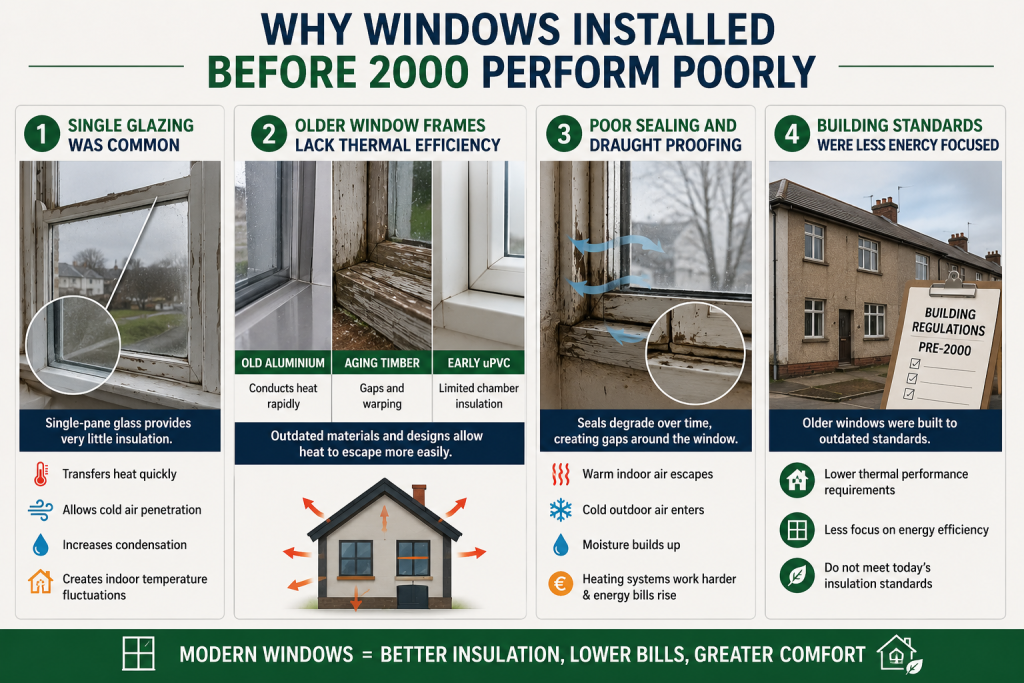
1. Single Glazing Was Common
Before double glazing became standard, many Irish homes used single-pane glass. Unfortunately, single glazing provides very little insulation.
Why Single Glazing Causes Heat Loss
Single-pane windows:
- Transfer heat quickly
- Allow cold air penetration
- Increase condensation
- Create indoor temperature fluctuations
By comparison, modern double or triple glazing traps insulating gas between panes, dramatically reducing thermal transfer.
2. Older Window Frames Lack Thermal Efficiency
Traditional timber and early aluminium frames were not designed with modern insulation technology.
Common Problems With Older Frames
| Frame Type | Common Issue | Impact on Heat Loss |
|---|---|---|
| Old Aluminium | Conducts heat rapidly | High thermal transfer |
| Aging Timber | Gaps and warping | Draughts and leaks |
| Early uPVC | Limited chamber insulation | Reduced efficiency |
Today, modern uPVC and thermally broken aluminium frames perform far better.
3. Poor Sealing and Draught Proofing
Over time, seals around windows naturally degrade. Consequently, gaps begin to appear around the frame.
What Happens When Seals Fail?
When seals weaken:
- Warm indoor air escapes
- Cold outdoor air enters
- Moisture builds up
- Heating systems work harder
Therefore, homeowners often spend more on energy while still feeling uncomfortable indoors.
4. Building Standards Were Less Energy Focused
Before the early 2000s, Irish building regulations placed less emphasis on thermal efficiency. As a result, many windows installed during that period simply do not meet modern insulation standards.
Today’s energy-efficient windows must comply with stricter thermal performance requirements. Consequently, modern replacements offer substantially better heat retention.
The Irish Climate Makes Window Efficiency Even More Important
Ireland’s damp and windy climate creates additional pressure on older windows. Because winters are long and moisture levels remain high, inefficient windows quickly become a major issue.
Why Irish Weather Increases Heat Loss
Frequent Rain and Wind
Strong winds push cold air through weak seals and frame gaps.
High Humidity
Moisture increases condensation problems on poorly insulated glass.
Long Heating Seasons
Homes require heating for extended periods throughout the year.
Therefore, upgrading windows in Ireland delivers greater long-term energy savings compared to milder climates.
Benefits of Replacing Old Windows in Irish Homes
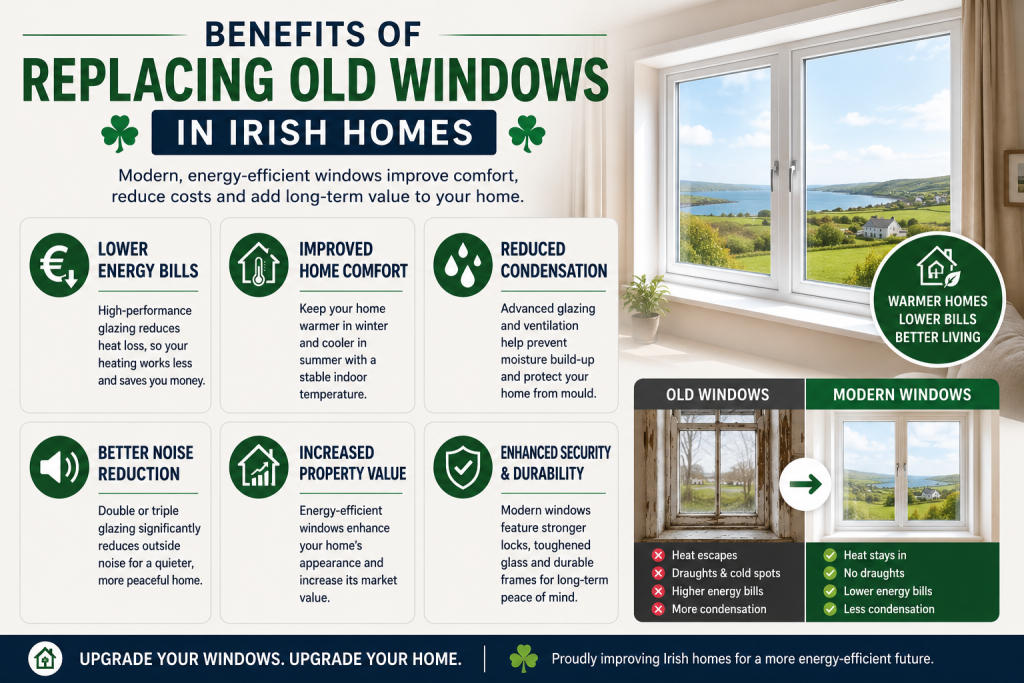
Modern replacement windows provide far more than aesthetic improvements. In fact, they directly improve energy efficiency, indoor comfort, and home value.
Key Benefits of Modern Energy-Efficient Windows
Lower Energy Bills
Efficient glazing reduces heat loss significantly. Consequently, homeowners often notice lower heating costs.
Improved Home Comfort
Rooms stay warmer for longer while draughts decrease dramatically.
Reduced Condensation
Modern glazing systems minimise moisture build-up on windows.
Better Noise Reduction
Double and triple glazing reduce outside noise effectively.
Increased Property Value
Energy-efficient homes are increasingly attractive to buyers in Ireland.
Why Many Irish Homeowners Choose Wright Windows
When replacing outdated windows, choosing an experienced installer matters just as much as selecting quality products.
Wright Windows has become a trusted name for homeowners across Ireland because they specialise in high-performance window and door solutions designed for Irish weather conditions.
What Makes Wright Windows Stand Out?
Energy-Efficient Products
Their modern window systems help reduce heat transfer and improve insulation.
Professional Installation
Proper installation prevents air leaks and maximises thermal performance.
Custom Designs
Homeowners can choose styles that match both traditional and modern properties.
Long-Term Durability
Their windows are designed to withstand Ireland’s challenging climate.
As a result, many homeowners upgrade older windows specifically to improve comfort and lower annual heating expenses.
Double Glazing vs Triple Glazing: Which Is Better?
Choosing between double and triple glazing depends on budget, insulation goals, and property type.
Comparison Table
| Feature | Double Glazing | Triple Glazing |
|---|---|---|
| Energy Efficiency | High | Very High |
| Noise Reduction | Good | Excellent |
| Cost | More Affordable | Higher Initial Cost |
| Heat Retention | Strong | Superior |
| Suitable for Ireland | Yes | Excellent for colder areas |
For most Irish homes built before 2000, double glazing already delivers substantial energy improvements. However, triple glazing may offer additional benefits in colder or exposed locations.
How to Know If Your Windows Need Replacing
Many homeowners delay replacement because they are unsure whether their windows are truly inefficient.
Signs You Should Replace Your Windows
- Your windows are over 20 years old
- Condensation forms regularly
- Rooms feel cold despite heating
- Frames are damaged or warped
- Energy bills keep rising
- Draughts are noticeable
If several of these signs apply, replacement windows could significantly improve your home’s efficiency.
Read more : How to Reduce Traffic Noise in Dublin Homes Near Main Roads with Modern Windows
Frequently Asked Questions
Yes. Older windows allow substantial heat loss, which forces heating systems to work harder and consume more energy.
Absolutely. Because Ireland experiences cool, damp weather for much of the year, double glazing greatly improves insulation and comfort.
High-quality modern windows can last 20–40 years depending on materials and maintenance.
Yes. Energy-efficient windows can contribute positively to a home’s BER (Building Energy Rating).
Final Thoughts
Homes built in Ireland before 2000 often lose significant amounts of heat through outdated windows. Unfortunately, single glazing, poor seals, ageing frames, and old installation standards all contribute to rising heating costs and reduced comfort.
However, modern energy-efficient window replacements can transform thermal performance dramatically. Not only do they reduce heat loss, but they also improve comfort, reduce condensation, and enhance property value.
Therefore, homeowners looking to improve energy efficiency should strongly consider upgrading their windows with trusted specialists like Wright Windows.
As energy efficiency becomes increasingly important across Ireland, investing in modern windows is no longer just a home improvement — it is a long-term financial and comfort upgrade.